by Debra | Feb 9, 2026
Do We All Have Trauma?
I have been studying trauma and its lifelong effects for many years, including the work of Dr. Gabor Maté. If you haven’t watched his documentary The Wisdom of Trauma, I highly recommend it. The film shows that trauma isn’t just what happens to you — it’s also what you needed and did not receive.
Trauma Is More Than Abuse
Many people think trauma only happens through physical, emotional, or sexual abuse. But trauma can form any time a child feels unseen, overwhelmed, or disconnected — even when their parents love them.
For example, some parents use the “cry it out” method, believing it teaches independence. When the baby stops crying, they often assume the approach worked.
Dr. Maté explains that the baby stops because their nervous system shuts down from exhaustion, not because they learned to self-soothe. The child’s brain protects them by disconnecting — a survival response that can turn into emotional withdrawal later in life.
How Trauma Develops in Modern Society
Childhood experiences shape us deeply, but they’re only one part of the trauma picture. Dr. Maté also highlights the trauma that arises from cultural pressures, lack of support, and the overwhelming stress many families face.
Imagine a single mother working two jobs. She loves her baby, but her limited time and support make it hard to meet every emotional need. The baby spends long hours without consistent connection and begins to adapt by not expecting much.
This adaptation isn’t a lack of love — it’s a result of a society that gives parents responsibility without support.
Our culture values productivity more than presence. It encourages parents to push through exhaustion and children to hide their emotions. Over time, many adults grow up feeling disconnected from themselves because they never learned how to express or understand their emotional world.
Why So Many Adults Feel Disconnected
Dr. Maté teaches that trauma disconnects us from our authenticity. Many adults feel lost or overwhelmed because:
-
They learned to “be good” instead of feeling their emotions.
-
Their caregivers were stressed or unavailable.
-
They were rewarded for staying quiet, strong, or self-reliant.
-
Teachers, doctors, and other professionals weren’t trained in trauma-informed care.
Parents usually do what they know. They repeat what they were taught. None of this makes them bad — it simply means they didn’t have the tools.
But once we become adults, we have the power to heal what we didn’t receive.
Inner-Child Work Helps You Reconnect
Inner-child healing gives you a safe way to revisit early emotional wounds and reconnect with the parts of yourself that adapted to survive. This work helps you:
-
Identify unmet needs from childhood
-
Understand the coping patterns you developed
-
Break cycles of disconnection or shutdown
-
Strengthen your relationships and boundaries
-
Reclaim your authentic voice
We cannot change our childhood. But we can change how those experiences live inside us now.
How Retreat Work Supports Deep Healing
In every retreat I lead — whether it’s individual, couples, or mother-daughter work — I guide clients through trauma-informed inner-child healing.
When people finally understand the roots of their patterns, their lives begin to shift. They reconnect with their younger selves, soften old defenses, and open up to new possibilities in their relationships.
Healing happens when you give yourself permission to look inward with compassion instead of judgment. You begin to understand your story, not blame yourself for it.
We all carry wounds.
We all have an inner child waiting to be seen, heard, and supported.
And when we finally turn toward that younger part of ourselves, transformation begins.
If you’re interested in finding ways to heal and bring calm and presence into your life sign up for my FREE CONSULT here.
Warmly, Debra
by Debra | Jun 12, 2025
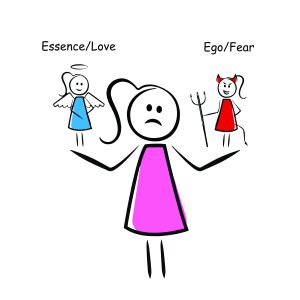 Have you ever asked yourself: Do I truly love and accept who I am—mistakes and all?
Too often, we label our actions (and ourselves) as “good” or “bad.” This kind of black-and-white thinking comes from what some call the “lower mind”—the part of us that judges rather than understands. Yes, our choices shape our lives, and some lead us down paths we wouldn’t choose again. But even those missteps can become powerful lessons that contribute to our growth.
When a decision results in pain, regret, or discomfort, it doesn’t mean you’re bad—it means you’re human. What matters is what you do next. Rather than beat yourself up, try this instead:
Acknowledge the choice. Learn from it. Forgive yourself. Then move forward with new awareness.
Many of us were raised hearing, “Be a good girl” or “Don’t be bad.” Whether said directly or implied through disapproval, these early messages taught us to judge ourselves harshly. Even if your parents didn’t use those exact words, you may still have internalized the sense that something about you needed fixing. That constant pressure to be “better” can linger, shaping how you see yourself today.
Here’s the truth: You’re not here to be perfect. You’re here to evolve.
The real opportunity lies in looking closely at the choices that didn’t serve you—and understanding why. When we simply label ourselves as good or bad, we shut down curiosity and compassion. But when we choose to explore what we really wanted, and how we might approach things differently next time, we grow.
So, the next time you feel self-judgment creeping in, pause. Ask yourself:
- What outcome was I hoping for?
- What need was I trying to meet?
- What can I do differently now—with love and self-respect?
Self-acceptance isn’t about letting yourself off the hook. It’s about learning without shame.
You’re not bad. You’re becoming.
If you’re struggling to find that self-love, or if you’re stuck in old patterns that keep repeating, you’re not alone. My retreats and one-on-one mentoring are designed to help you uncover what’s holding you back—whether it’s through an individual intensive, a couples retreat, pre-marital retreat or a mother-daughter experience. If you have a teen, check out my mother/teen daughter retreats! You’ll walk away with a clearer path, a lighter heart, and a deeper connection to yourself.
If you have a teen, or a friend with a teen, check out my other website EmpoweredTeensandParents.com. It is a great resource for handling the tough teenage years more consciously.
And I’m excited to announce… the release date for my latest book is 7/7/25! This book is for parents of teens, although any parent would benefit. It’s called: What If Your Teen Isn’t the Problem? A Guide to Conscious Parenting. More about that soon!
Book a FREE Consult
Adult Mother Daughter Retreat Testimonial
“I can’t thank you enough for all you have done for me and my daughter. Having a “young adult” child move to the other side of the country while trying to resolve issues is needless to say challenging. When I was looking for an adult mother-daughter retreat online, I came across your website. Our expectations were exceeded. I loved that your retreat was so personal. The “one on one” sessions truly helped me see that my daughter was an adult and on her own journey. We both felt so comfortable talking to you. You were non-judgemental and so intuitive. You gave us both tools to use in life, not only with each other but with anyone we have a relationship with. Especially our own “little girls. The beautiful setting of Sedona and the activities you planned for us were the icing on the cake. We resolved so many issues and re-bonded emotionally and spiritually. I can truthfully say that we are closer now than ever. We have a new found respect for each other. My daughter and I needed this so badly. I have tears in my eyes again while writing to you. (and I am not a cryer) We love you and thank you for everything. With gratitude,” – Jill, Mother
Love, Debra
by Debra | Oct 1, 2018
How alone time is critical to self preservation.
Do you set enough time aside or do you need to come to a personal retreat?
It is easier for us to move through the difficulties of our life when we give ourselves enough alone time to figure things out. When our own physical and spiritual needs are met we have the ability to show up in our lives with greater ease.
Each of us has a certain well of energy that we must replenish regularly. When we don’t spend enough time alone tending to ourselves we will bottom out. When we are constantly going, scheduling every minute of our life we will start to feel depleted and exhausted. Through this exhaustion we will start to feel very disconnected from others and ourselves.
We need to find the time to nurture and care for ourselves through enough “me time.” Most people I know give a lot of themselves to others and very little to themselves. When we give to ourselves we are viewed as selfish, but this is actually not the truth. Do you know how they say when you are flying if something happens to put the bag over your nose first then a child next to you? There is a reason for this. If I am completely depleted from giving constantly and I’m not giving to myself I will have less to give to others and what I give to others will be full of resentment.
We can only be big in the world when we are full inside, through fulfilling our own spiritual and physical needs. If I am empty inside, empty is what I bring to the world.
I’m a firm believer in making time for yourself, whether it be in meditation, a creative endeavor, hiking, or anything that you are doing alone to assure self-preservation. When we take time for ourselves we are preparing ourselves for our day in a different way. It is critical to your well-being because it ensures that you aren’t left with an empty well, with nothing to give to yourself or others.
This is one of the main reasons why a personal retreat is so powerful. It sets aside 2 to 3 days of “you time,” that is completely uninterrupted. Besides filling your well, the breakthroughs will be amazing.




 Our expectations were exceeded. I loved that your retreat was so personal. The “one on one” sessions truly helped me see that my daughter was an adult and on her own journey. We both felt so comfortable talking to you. You were non-judgemental and so intuitive. You gave us both tools to use in life, not only with each other but with anyone we have a relationship with. Especially our own “little girls. The beautiful setting of Sedona and the activities you planned for us were the icing on the cake. We resolved so many issues and re-bonded emotionally and spiritually. I can truthfully say that we are closer now than ever. We have a new found respect for each other. My daughter and I needed this so badly. I have tears in my eyes again while writing to you. (and I am not a cryer) We love you and thank you for everything. With gratitude,” – Jill, Mother