by Debra | Feb 9, 2026
Do We All Have Trauma?
I have been studying trauma and its lifelong effects for many years, including the work of Dr. Gabor Maté. If you haven’t watched his documentary The Wisdom of Trauma, I highly recommend it. The film shows that trauma isn’t just what happens to you — it’s also what you needed and did not receive.
Trauma Is More Than Abuse
Many people think trauma only happens through physical, emotional, or sexual abuse. But trauma can form any time a child feels unseen, overwhelmed, or disconnected — even when their parents love them.
For example, some parents use the “cry it out” method, believing it teaches independence. When the baby stops crying, they often assume the approach worked.
Dr. Maté explains that the baby stops because their nervous system shuts down from exhaustion, not because they learned to self-soothe. The child’s brain protects them by disconnecting — a survival response that can turn into emotional withdrawal later in life.
How Trauma Develops in Modern Society
Childhood experiences shape us deeply, but they’re only one part of the trauma picture. Dr. Maté also highlights the trauma that arises from cultural pressures, lack of support, and the overwhelming stress many families face.
Imagine a single mother working two jobs. She loves her baby, but her limited time and support make it hard to meet every emotional need. The baby spends long hours without consistent connection and begins to adapt by not expecting much.
This adaptation isn’t a lack of love — it’s a result of a society that gives parents responsibility without support.
Our culture values productivity more than presence. It encourages parents to push through exhaustion and children to hide their emotions. Over time, many adults grow up feeling disconnected from themselves because they never learned how to express or understand their emotional world.
Why So Many Adults Feel Disconnected
Dr. Maté teaches that trauma disconnects us from our authenticity. Many adults feel lost or overwhelmed because:
-
They learned to “be good” instead of feeling their emotions.
-
Their caregivers were stressed or unavailable.
-
They were rewarded for staying quiet, strong, or self-reliant.
-
Teachers, doctors, and other professionals weren’t trained in trauma-informed care.
Parents usually do what they know. They repeat what they were taught. None of this makes them bad — it simply means they didn’t have the tools.
But once we become adults, we have the power to heal what we didn’t receive.
Inner-Child Work Helps You Reconnect
Inner-child healing gives you a safe way to revisit early emotional wounds and reconnect with the parts of yourself that adapted to survive. This work helps you:
-
Identify unmet needs from childhood
-
Understand the coping patterns you developed
-
Break cycles of disconnection or shutdown
-
Strengthen your relationships and boundaries
-
Reclaim your authentic voice
We cannot change our childhood. But we can change how those experiences live inside us now.
How Retreat Work Supports Deep Healing
In every retreat I lead — whether it’s individual, couples, or mother-daughter work — I guide clients through trauma-informed inner-child healing.
When people finally understand the roots of their patterns, their lives begin to shift. They reconnect with their younger selves, soften old defenses, and open up to new possibilities in their relationships.
Healing happens when you give yourself permission to look inward with compassion instead of judgment. You begin to understand your story, not blame yourself for it.
We all carry wounds.
We all have an inner child waiting to be seen, heard, and supported.
And when we finally turn toward that younger part of ourselves, transformation begins.
If you’re interested in finding ways to heal and bring calm and presence into your life sign up for my FREE CONSULT here.
Warmly, Debra
by Debra | Jun 12, 2025
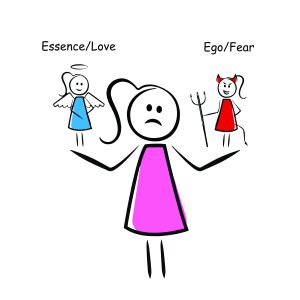 Have you ever asked yourself: Do I truly love and accept who I am—mistakes and all?
Too often, we label our actions (and ourselves) as “good” or “bad.” This kind of black-and-white thinking comes from what some call the “lower mind”—the part of us that judges rather than understands. Yes, our choices shape our lives, and some lead us down paths we wouldn’t choose again. But even those missteps can become powerful lessons that contribute to our growth.
When a decision results in pain, regret, or discomfort, it doesn’t mean you’re bad—it means you’re human. What matters is what you do next. Rather than beat yourself up, try this instead:
Acknowledge the choice. Learn from it. Forgive yourself. Then move forward with new awareness.
Many of us were raised hearing, “Be a good girl” or “Don’t be bad.” Whether said directly or implied through disapproval, these early messages taught us to judge ourselves harshly. Even if your parents didn’t use those exact words, you may still have internalized the sense that something about you needed fixing. That constant pressure to be “better” can linger, shaping how you see yourself today.
Here’s the truth: You’re not here to be perfect. You’re here to evolve.
The real opportunity lies in looking closely at the choices that didn’t serve you—and understanding why. When we simply label ourselves as good or bad, we shut down curiosity and compassion. But when we choose to explore what we really wanted, and how we might approach things differently next time, we grow.
So, the next time you feel self-judgment creeping in, pause. Ask yourself:
- What outcome was I hoping for?
- What need was I trying to meet?
- What can I do differently now—with love and self-respect?
Self-acceptance isn’t about letting yourself off the hook. It’s about learning without shame.
You’re not bad. You’re becoming.
If you’re struggling to find that self-love, or if you’re stuck in old patterns that keep repeating, you’re not alone. My retreats and one-on-one mentoring are designed to help you uncover what’s holding you back—whether it’s through an individual intensive, a couples retreat, pre-marital retreat or a mother-daughter experience. If you have a teen, check out my mother/teen daughter retreats! You’ll walk away with a clearer path, a lighter heart, and a deeper connection to yourself.
If you have a teen, or a friend with a teen, check out my other website EmpoweredTeensandParents.com. It is a great resource for handling the tough teenage years more consciously.
And I’m excited to announce… the release date for my latest book is 7/7/25! This book is for parents of teens, although any parent would benefit. It’s called: What If Your Teen Isn’t the Problem? A Guide to Conscious Parenting. More about that soon!
Book a FREE Consult
Adult Mother Daughter Retreat Testimonial
“I can’t thank you enough for all you have done for me and my daughter. Having a “young adult” child move to the other side of the country while trying to resolve issues is needless to say challenging. When I was looking for an adult mother-daughter retreat online, I came across your website. Our expectations were exceeded. I loved that your retreat was so personal. The “one on one” sessions truly helped me see that my daughter was an adult and on her own journey. We both felt so comfortable talking to you. You were non-judgemental and so intuitive. You gave us both tools to use in life, not only with each other but with anyone we have a relationship with. Especially our own “little girls. The beautiful setting of Sedona and the activities you planned for us were the icing on the cake. We resolved so many issues and re-bonded emotionally and spiritually. I can truthfully say that we are closer now than ever. We have a new found respect for each other. My daughter and I needed this so badly. I have tears in my eyes again while writing to you. (and I am not a cryer) We love you and thank you for everything. With gratitude,” – Jill, Mother
Love, Debra
by Debra | Dec 14, 2015
Through out my life, I have always been in search of a teacher that can take me to the next level in my personal growth. It’s always comical to me when I am looking how the perfect teacher comes to me. When I am talking to someone about mentoring or a personal retreat, they just know and we start the process. I often hear from clients that when they read through my website, SedonaSoulRetrieval.com, that my words just resonated with them and they called.
In all the spiritual guidance books I have read, they seem to say the same things about needing a teacher to uncover your blind spots. We all have blind spots and we can’t see them, hence blind spots. I’ve always enjoyed my relationship with my teachers because if I am with them long enough, they get to know me as I am seeing myself and can help me with those shadow sides that I am either not willing to see or just simply don’t see. If your relationship is a conscious one, most of the time you are willing to look at what your teacher can see. This may not always be fun or easy, but the rewards of seeing yourself clearer are always enlightening and put you in a better place.
The process that I designed and use gives my clients the opportunity to really see themselves, understand themselves, and make the shifts in their lives that are necessary for their growth as spiritual beings in this physical world.
The process is using life experiences as a tool to see if you are operating from a lower or higher consciousness. We want to be operating from our higher selves, obviously more than our lower selves. But what if we don’t even know the difference? This is where the problem lies. To get to a higher way of living, we first need to know what our lower self is saying and what action our lower self is taking. Then, and only then, can we shift into a higher way of living.
By shifting into living in our higher selves, we can go into the world with a higher vibration and participate with others from our heart, not our fears. We can show up for family, friends, the world and ourselves from a place of love, kindness and compassion.
The first place to start has to be ourselves and then we can take ourselves into the world from an empowered position and help change the world.
“I walked into this retreat feeling overwhelmingly sad, broken and alone. I am walking out empowered awake and at peace. To say that this retreat was life changing would be a huge understatement. This work is incredible and creates huge shifts. I’ve done self-improvement work for over a decade, but nothing ever really changed for me.
This work with Debra made it clear why nothing had ever worked before. She is an incredibly warm, sincere and loving person who creates a beautifully safe place to work in. I don’t want to leave! All I can say is you deserve this retreat. Love yourself enough to give yourself this gift. I will be forever grateful that I get it.” Melissa Sanford
by Debra | Oct 5, 2015
Do you have guilt?
Where does it come from?
What actions do you take when you feel it?
How do you process it?
We have all had guilt at one time or another, whether it’s guilt about our parenting skills, our work performance, our exercise regime, eating habits or just a constant feeling of not being good enough.
It’s what we do after we feel the guilt that really matters. We know we are going to feel it but what do we do with it when it occurs?
The first thing we need to do is track where it comes from. Why are we feeling guilty? If the why is, I’m eating poorly and feeling guilty, okay. Now let’s track it further. Why are you eating poorly? Is it because of stress, for comfort, to medicate feelings, or maybe it’s a lack of knowledge of good eating habits? After we have gathered data around what we are doing that caused the guilt and why, we start to have an understanding about ourselves and bring consciousness to the issue.
After we understand this, we now need to determine if the guilt is about our behavior or is it someone else’s projection. A perfect example of it being someone else’s projection would be someone wanting you to do something and guilting you into it. They would try to manipulate you by saying you were doing something wrong if you didn’t behave the way they wanted you to. Be certain before you change your behavior that it’s because this is behavior you want to change and not because someone is manipulating you.
The exploration of guilt is very important because it allows you to know what to do with the guilt. You will need to look at your part and let the guilt know that you don’t need it to beat you up in order to make a shift. This is where a personal retreat can help!
The next thing to look at is the action your little girl might try to get you to take to make the guilty feelings go away. Sometimes when we are feeling guilty, we will appease others to make the feelings go away. This is where guilt is tricky. In the example of eating better, you would want to obviously change your diet and eat healthier. But in a situation where maybe an overweight family member is telling you it’s your fault she eats poorly, this would be a guilting projection.
Does she gain weight when you eat? Exactly!
Processing the guilt by talking to it as well as the little girl is a good way to get to the bottom of the feelings. Ask your little girl about what she is saying about the situation, and then ask the guilt why it is feeling this way about the situation. Guilty!
This process takes an extreme amount of practice and patience, and it’s critical to utilize someone who can see things from the outside. This is why a personal retreat is so powerful. It helps you see yourself from the outside and untangle from your emotions.
If you would like to step outside of your emotional entanglement and see more clearly, please call me and let’s chat about ways you can become clearer.
by Debra | Sep 28, 2015
Do you have good communication skills?
Do you say what you mean?
Do you listen or are you thinking about what you are going to say next?
Are you afraid to speak your truth?
Have you listened to most people communicate? Their communication may sound a bit cryptic. They may think they are expressing their needs, but is their message clear?
If we go deeper into our needs, we will notice that our surface level communication does not address our real concerns or needs. Let’s look at an example of what I am talking about.
You and your partner have planned an evening out to go to dinner and you both just got home from work. You say to your partner, “Are you going to take a shower?” He says yes, and off he goes into the bathroom. You are feeling a bit anxious because when you don’t eat on a regular schedule, your blood levels drop a bit and you start to feel sick. Do you think your partner knows how you feel? No, he thinks you just wanted to know if he was taking a shower. A better way to communicate your needs would have sounded more like this. “I was wondering how long it is going to take you to get ready because I may need to eat a small snack before we go, so that I don’t get a blood sugar crash and feel crummy. I’m really looking forward to our evening together and it would disappoint me to feel bad.”
Pretty obvious which one communicates your needs better, right? We do this all the time. Our partners and the people in our lives cannot read our minds and understand what our concerns and needs are unless we tell them. Unless we are aware of what our main concerns are with ourself, we won’t be able to convey them to anyone else.
The key to helping your partner understand you is:
- Pause before you speak.
- Think about what your needs are.
- Think about what the clearest way to express them would be.
- Communicate them clearly.
Most arguments start because of a lack of clarity in communication. My clients will often complain that their partner says, “I’m not a mind reader.” So, help your partner understand you and show up for you by communicating clearly.
by Debra | Jun 29, 2015
It’s easier to stay calm when you have small triggers, maybe from your co-workers, grocery store clerks or anyone actually outside of your core family. Have you noticed how bonkers you get when your partner, kids or parents do things that knock you off your center?
Our core family is our biggest teacher!
I am visiting my daughter and grandson this week and I am shocked at how easily I fall into taking things personally, through my little girl. I immediately recognize who is in the driver’s seat and tell her to please get in the back in the child’s seat. If I don’t pull my higher self in, she will create quite the scene, say things that blame, and inevitably there will be hurt feelings. She is not good at communication and negotiation. All she cares about is getting people to do or say what will make her feel better.
I am grateful that I have been doing this work long enough that I recognize when she is in play. If you don’t know when your inner child is up, you play out a very dramatic scene that will cause a disconnect in the relationship you are engaged in.
In a Personal Retreat you will learn how your little girl operates, how to calm her down, and act from a higher place. Ultimately we all want to be connected with the people in our lives. When we act from our little girl, we push people away. When our little girl is acting out by saying hurtful things or shutting people out and pouting, this kind of behavior will cause a disconnect and will keep you feeling separated in your life.
My grandson sometimes acts in ways that are very ME-centric. What I noticed is that my little girl takes it personally, thinking his actions have something to do with her. She feels like she did something wrong, she’s not important or good enough, etc. If I act from my little girl when she is feeling like that, she will try to get him to behave differently to make her feel better. When I’m in my higher self I know his behavior has nothing to do with me. This is very important because if I act from the place of “It’s about me,” I will blame him and he will feel bad and shut down to me and it will affect our closeness.
In my one-on-one personal retreat you will learn how to not take other people’s behaviors personally and develop closer relationships with the people in your life.





 Our expectations were exceeded. I loved that your retreat was so personal. The “one on one” sessions truly helped me see that my daughter was an adult and on her own journey. We both felt so comfortable talking to you. You were non-judgemental and so intuitive. You gave us both tools to use in life, not only with each other but with anyone we have a relationship with. Especially our own “little girls. The beautiful setting of Sedona and the activities you planned for us were the icing on the cake. We resolved so many issues and re-bonded emotionally and spiritually. I can truthfully say that we are closer now than ever. We have a new found respect for each other. My daughter and I needed this so badly. I have tears in my eyes again while writing to you. (and I am not a cryer) We love you and thank you for everything. With gratitude,” – Jill, Mother